குறிப்பு - இதன் தமிழாக்கம் இந்த பக்கத்தில் சற்று கீழே உள்ளது.
Join our WhatsApp group here -> https://chat.whatsapp.com/DtRfcPrnZykIfmavZU6kj0
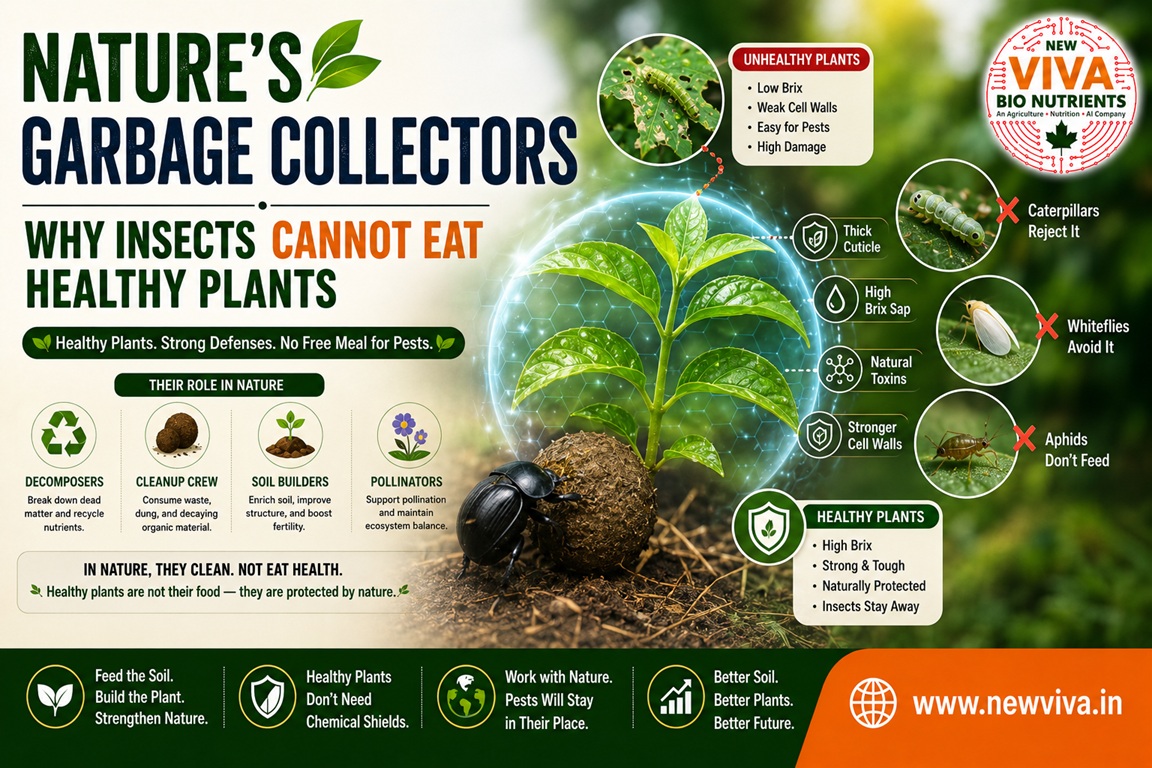
WA-012: Nature's Garbage Collectors — Why Insects Cannot Eat Healthy Plants
Today, we are going to break one of the biggest false beliefs of modern agriculture. Many farmers think that if a pest or worm comes to the field, they come out of hunger and bite our crop and destroy it. So, as soon as they see a pest, they panic, buy the potent chemical poison available at the shop, bring it, and spray it.
But, if we look at it scientifically, would you believe if I said that pests are not your enemies at all? In reality, they are Nature's Garbage Collectors. These pests are actually a cleanup force sent by nature to wipe out only the sick, weak crops that come due to nutrient deficiency in the soil, removing them from the earth!
We saw in the previous post, didn't we—when your crop's Brix level (Digital Health Score) is high, pests can't even bite that crop. If they still happen to eat it, they will die. Let's now see the incredible biological science behind that.
The Hidden Science: The Weak Stomach of Pests
Pests do not have an advanced digestive system like humans, cows, or birds. Pests do not even have an organ called the 'Liver'! Because of this, enzymes that can digest complex proteins and dense complex sugars found in plants are not secreted in the pest's stomach.
Pests can only digest very simple, half-baked food:
- Undigested raw amino acids
- Simple sugars like glucose
When the soil is balanced and the crop is in good health (High Brix), its leaf factory works superbly. It immediately converts the nutrients it takes from the roots into high-quality complex proteins and dense carbohydrates.
If a worm or sap-sucking pest bites this High Brix leaf... it cannot digest it at all. That dense sap goes into the pest's stomach, turns sour, creates gas and diarrhea, and kills the pest. So, a healthy crop is like a desert that is not fit for pests to eat!
How Do We Invite Pests to "Come and Eat"?
So then why is your field teeming with pests? For a moment, remember posts WA-006 and WA-009—the urea and potassium overload dangers we saw.
The urea (nitrogen) we dump without understanding the nature of the soil creates a half-baked nitrogen flood inside the crop's body. Because sulfur, magnesium, and micronutrients are locked up in the soil, the crop struggles to convert that nitrogen into complete protein.
Now, undigested raw amino acids and simple, water-like sugars accumulate in the crop's blood (sap). Its Brix level drops to a dangerous 2 or 3.
From such low-Brix crops, a type of electromagnetic frequency is emitted. That gives a signal to the pest world: "This plant is a patient that doesn't know how to cook! It has lots of garbage accumulated in its body. Come immediately and clean this up!"
Within the next 48 hours, pests descend on the field. They haven't come to attack your crop; they are the cleanup force sent by nature to clean up the mess because you gave the wrong nutrition and turned the soil and crop into a garbage dump!
What We Need to Understand: Eliminate the Garbage? Or Kill the Cleanup Worker?
When you spray chemical pesticide, you are killing the cleanup worker who came to collect the garbage, but you're leaving the garbage (the nutrient deficiency) right there as it is. As soon as the potency of the poison reduces, nature will send the next cleanup force. This is why you get trapped in the hellish cycle of spraying once every 15 days.
Today, even natural farmers do the same mistake. They spray decoctions saying pests don't like bitterness, but they don't think about how a pest could come to a healthy crop in the first place. When a pest comes because a crop is unhealthy, how can that crop give complete health to the humans who eat it? As far as I am concerned, there's no chance of that.
Just as with humans, so it is with crops. Just as there is a measure for each thing for a human—carbohydrates, fiber, protein, vitamins, minerals, fats—the same measure exists for crops. This is what nutrient farming does.
That is why I say that only Regenerative / Nutrient Agriculture is the future of farming. It provides a clear solution to this strange problem. When we balance the soil using the Albrecht-Kinsey method, it paves the way for all the needed nutrients to reach the crop without hindrance. Also—if we give each crop what it needs, according to its season, in a way that the crop can easily take up those nutrients, then the crop will fully cook its own food and be strong.
Once your crop achieves this mineral balance, a protective ring forms around it. Pests will cross your field and go to the neighboring low-Brix land where chemicals have been applied. Stop buying poison to destroy pests—let's amend the soil and eliminate the garbage! Let's establish crop health.
We'll talk again.
Tamil Version (தமிழ் வடிவம்)
WA-012: இயற்கையின் துப்புரவுத் தொழிலாளர்கள் — ஆரோக்கியமான பயிர்களை பூச்சிகளால் ஏன் சாப்பிட முடியாது?
நவீன விவசாயத்தோட ஒரு மிகப்பெரிய தப்பான நம்பிக்கையை இன்னைக்கு நாம உடைக்கப்போறோம். வயல்ல பூச்சியோ இல்ல புழுவோ வந்தா, அதுங்க ஏதோ பசியில வந்து நம்ம பயிரை கடிச்சு நாசம் பண்ணுதுனு பல விவசாயிகள் நினைக்கிறாங்க. அதனால பூச்சி கண்ணுல பட்ட உடனே, பதறிப்போய் கடையில இருக்குற வீரியமிக்க ரசாயன விஷத்தை வாங்கிட்டு வந்து தெளிக்கிறாங்க.
ஆனா, அறிவியல் பூர்வமா பார்த்தா பூச்சிகள் உங்க எதிரிகளே கிடையாதுனு சொன்னா நம்புவீங்களா? நிஜத்துல அதுங்க இயற்கையின் துப்புரவுத் தொழிலாளர்கள் (Nature’s Garbage Collectors). மண்ணுல சத்து குறைபாடு காரணமா வர்ற நோயாளியான, பலவீனமான பயிர்களை மட்டும் பூமியில இருந்து துடைச்சு அழிக்கிறதுக்காக இயற்கை அனுப்பிய ஒரு துப்புரவுப் படைதான் இந்த பூச்சிகள்!
நாம போன பதிவுல பார்த்தோம் இல்லையா—உங்க பயிரோட Brix அளவு (டிஜிட்டல் ஆரோக்கிய ஸ்கோர்) எப்போ அதிகமா இருக்கோ, அப்போ பூச்சிகளால அந்தப் பயிரை கடித்துக் கூட பார்க்க முடியாது. அப்படி மீறிச் சாப்பிட்டா அதுங்க செத்துப்போயிடும். அதுக்கு பின்னாடி இருக்குற அசாத்திய உயிரியல் அறிவியல் என்னன்னு இப்ப பார்ப்போம்.
மறைந்திருக்கும் அறிவியல்: பூச்சிகளின் பலவீனமான வயிறு
பூச்சிகளுக்கு மனிதர்கள், மாடுகள் அல்லது பறவைகளைப் போல மேம்பட்ட செரிமான மண்டலம் கிடையாது. பூச்சிகளுக்கு 'கல்லீரல்' (Liver) என்ற உறுப்பே கிடையாது! இதனால, தாவரங்கள்ல இருக்குற சிக்கலான கூட்டுப் புரதங்களையும் (Complex Proteins), அடர்த்தியான கூட்டுச் சர்க்கரைகளையும் செரிக்க வைக்கக்கூடிய என்சைம்கள் பூச்சிகளோட வயித்துல சுரக்காது.
பூச்சிகளால ரொம்ப எளிமையான, அரைகுறையான உணவை மட்டும்தான் செரிக்க வைக்க முடியும்:
- செரிக்கப்படாத பச்சை அமினோ அமிலங்கள் (Raw Amino Acids)
- தண்ணீர் போன்ற எளிய சர்க்கரைகள் (Glucose)
மண் சமநிலை அடைந்து, பயிர் நல்ல ஆரோக்கியத்தோடு (High Brix) இருக்கும்போது, அதோட இலைத் தொழிற்சாலை சூப்பரா வேலை செய்யும். அது வேர்ல இருந்து எடுக்குற சத்துக்களை உடனே உயர்தர கூட்டுப் புரதங்களாகவும், அடர்த்தியான கார்போஹைட்ரேட்டுகளாகவும் மாத்திடும்.
இந்த உயர் ப்ரிக்ஸ் (High Brix) இலையை ஒரு புழுவோ அல்லது சாறு உறிஞ்சும் பூச்சியோ கடிச்சா... அதால அதைச் செரிக்கவே முடியாது. அந்த அடர்த்தியான சாறு பூச்சியோட வயித்துக்குள்ள போய் புளிச்சுப்போய், கேஸ் (Gas) மற்றும் வயிற்றுப்போக்கை உண்டாக்கி அந்தப் பூச்சியைக் கொன்னுடும். அதனால, ஆரோக்கியமான பயிர்ன்றது பூச்சிகளுக்குச் சாப்பிட தகுதி இல்லாத ஒரு பாலைவனம் மாதிரி!
நாம எப்படி பூச்சிகளை "சாப்பிட வாங்க"னு கூப்பிடுறோம்?
அப்போ ஏன் உங்க வயல்ல பூச்சி மண்டிப் போயிருக்கு? ஒரு நிமிஷம் WA-006 மற்றும் WA-009 பதிவுகளை நினைச்சுப் பாருங்க—நாம பார்த்த யூரியா மற்றும் பொட்டாசியம் ஓவர்லோடு ஆபத்துகள்.
மண்ணோட தன்மையைத் தெரிஞ்சுக்காம நாம அள்ளிப்போடுற யூரியா (நைட்ரஜன்), பயிரோட உடம்புக்குள்ள ஒரு அரைகுறையான நைட்ரஜன் வெள்ளத்தை உருவாக்குது. மண்ணுல சல்பர், மெக்னீசியம் மற்றும் நுண்ணூட்டச்சத்துக்கள் லாக் ஆகிக் கிடக்குறதால, பயிரால அந்த நைட்ரஜனை முழுமையான புரோட்டீனா மாத்த முடியாம திணறும்.
இப்போ பயிரோட இரத்தத்துல (சாற்றில்) செரிக்கப்படாத பச்சை அமினோ அமிலங்களும், தண்ணீர் போன்ற எளிய சர்க்கரைகளும் தேங்கி நிக்கும். அதோட ப்ரிக்ஸ் அளவு ஆபத்தான 2 அல்லது 3-க்கு சரிஞ்சிடும்.
இப்படி ப்ரிக்ஸ் கம்மியா இருக்குற பயிர்கள்ல இருந்து ஒருவிதமான மின்காந்த அலைகள் (Electromagnetic frequencies) வெளியாகும். அது பூச்சி உலகத்துக்கு ஒரு சிக்னல் குடுக்கும்: "இந்தச் செடி சமைக்கத் தெரியாத நோயாளி! இது உடம்புல நிறைய குப்பை தேங்கிக் கிடக்கு, உடனே வந்து இதைச் சுத்தம் செய்யுங்க!"
அடுத்த 48 மணி நேரத்துல பூச்சிங்க வயல்ல இறங்கிடும். அதுங்க உங்க பயிரைத் தாக்க வரல; நீங்க தப்பான ஊட்டச்சத்தைக் குடுத்து மண்ணையும் பயிரையும் குப்பைத் தொட்டியா மாத்துனதால, அதைச் சுத்தம் செய்ய இயற்கை அனுப்புன துப்புரவுப் படைதான் அதுங்க!
நாம புரிஞ்சுக்க வேண்டிய விஷயம்: குப்பையை ஒழிப்பதா? துப்புரவுத் தொழிலாளியைக் கொல்வதா?
நீங்க ரசாயன பூச்சி மருந்தை அடிக்கும்போது, குப்பையை அள்ள வந்த துப்புரவுத் தொழிலாளியைக் கொல்றீங்களே தவிர, அங்க இருக்குற குப்பையை (சத்து குறைபாட்டை) அப்படியேதான் வச்சிருக்கீங்க. மருந்தின் வீரியம் குறைந்த உடனே, இயற்கை அடுத்த துப்புரவுப் படையை அனுப்பும். இதனாலதான் 15 நாளைக்கு ஒருமுறை மருந்து அடிக்குற நரக வளையத்துக்குள்ள நீங்க மாட்டிக்கிறீங்க.
இன்னைக்கு இயற்கை விவசாயிகளும் இதே தப்பத் தான் பண்றாங்க. பூச்சிகளுக்கு கசப்பு புடிக்காது அப்படின்னு கசாயம் அடிக்கிறாங்களே தவிர, ஒரு ஆரோக்கியமான பயிர்ல எப்படி பூச்சி வரும் அப்படின்னு யோசிக்கல. ஒரு பயிர் ஆரோக்கியம் இல்லாததுனால அதுல பூச்சி வரும் போது, அதை சாப்பிடற மனிதர்களுக்கு அது எப்படி பூரண ஆரோக்கியத்தை தந்திட முடியும். என்னை பொறுத்தவரை அதற்க்கு வாய்ப்பில்லை.
மனிதனுக்கு எப்படியோ, பயிர்களுக்கும் அப்படியே. எப்படி ஒரு மனிதனுக்கு மாவு சத்து, நார் சத்து, புரதச் சத்து, விட்டமின், மினரல்ஸ், கொழுப்பு சத்து அப்படின்னு ஓவ்வொன்னுக்கும் ஒரு அளவுகோல் இருக்கோ, அதே அளவுகோல் பயிர்களுக்கும் இருக்கு. இதைத்தான் ஊட்டச்சத்து விவசாயம் செய்யுது.
இதனால தான் மீளுருவாக்க / ஊட்டச்சத்து (Regenerative Ag) விவசாயம் மட்டும் தான் விவசாயத்தின் எதிர்காலம் அப்படின்னு சொல்றேன். இதுல இந்த விசித்திரப் பிரச்சனைக்கு தெளிவான தீர்வு தருது. ஆல்பிரெக்ட்-கின்சி முறைப்படி மண்ணை நாம பேலன்ஸ் செய்யும்போது, பயிருக்குத் தேவையான எல்லா சத்துக்களும் தடையின்றி கிடைக்க வழிவகுக்கும். அதோட - ஒவ்வொரு பயிருக்கும் என்ன தேவை என்பதை அதனோட பருவத்துக்கு ஏத்த மாதிரி, அந்த பயிர் அந்த ஊட்டச்சத்தை எளிதா எடுத்துக்கிற மாதிரி கொடுத்தோம் அப்படின்னா, பயிர் தன் உணவை முழுமையாச் சமைச்சு, தெம்பா இருக்கும்.
உங்க பயிர் இந்த மினரல் பேலன்ஸை அடைஞ்சிட்டா, அதுக்கு சுத்தி ஒரு பாதுகாப்பு வளையம் உருவாகிடும். பூச்சிங்க உங்க வயலைத் தாண்டி, பக்கத்துல ரசாயனம் போட்டு வச்சிருக்கற கம்மி ப்ரிக்ஸ் நிலத்துக்குப் போயிடும். பூச்சிகளை அழிக்க விஷம் வாங்குறதை நிறுத்துங்க—மண்ணைச் சீரமைச்சு குப்பையை ஒழிப்போம்! பயிர் ஆரோக்கியத்தை நிலை நிறுத்துவோம்.
இன்னும் பேசுவோம்.