குறிப்பு - இதன் தமிழாக்கம் இந்த பக்கத்தில் சற்று கீழே உள்ளது.
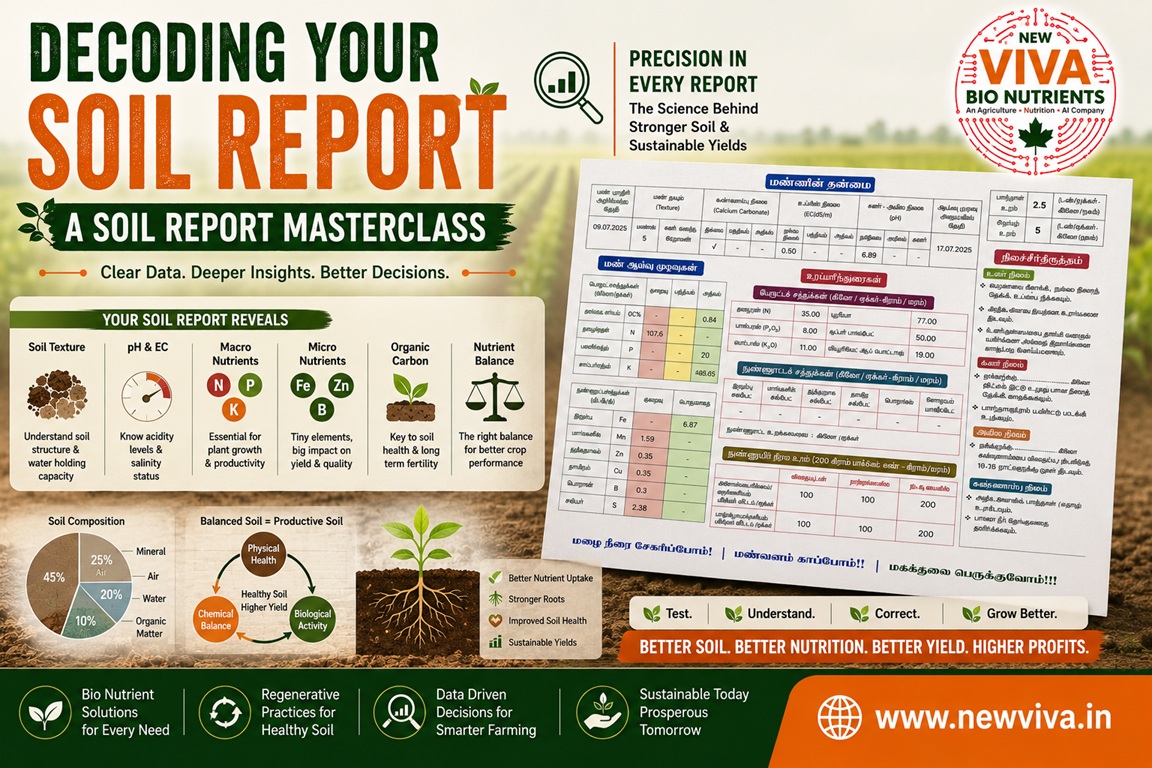
WA-009: Decoding Your Soil Report — A Soil Report Masterclass**
This report is from a paddy farmer in the Cauvery Delta region who holds NPOP organic certification and is currently in his third year of the certification cycle.
Most farmers pick up their soil test report, see nutrients marked "high, medium, or low," and head straight to the fertiliser shop. Whatever the shopkeeper recommends, they buy and apply.
But as we saw in the previous post through Mulder's Chart — nutrients in the soil never work in isolation. Today, using a real farmer's soil test report, we are going to look closely at what is actually happening beneath the surface, using the Albrecht-Kinsey science framework.
This report shows Organic Carbon at 0.84% — a good level — and Nitrogen at 107.6 kg/ha. Seeing this, the lab has recommended urea as usual. But if you follow that advice on this particular soil, your yield will suffer badly. Here is why.
Danger 1: The 90:1 Carbon-Nitrogen Hidden Trap
The lab marked nitrogen as "low" at 107.6 kg/ha and recommended 35 kg of nitrogen fertiliser. But when you calculate the C:N ratio, what you find is alarming.
The 0.84% organic carbon in this soil works out to 4,872 mg/kg of carbon. Divide that by the nitrogen value (53.8 mg/kg) and the ratio comes to 90:1.
A healthy soil should have a C:N ratio of 10:1 to 12:1.
When there is 90 parts carbon for every 1 part nitrogen, it means the soil is loaded with undecomposed organic matter. The microbes in the soil are hungry for nitrogen to break that material down. The moment you apply nitrogen fertiliser, the microbes steal it and lock it away before the crop can touch it — this is called Nutrient Immobilization. Your crop gets nothing.
What to do: To break this lock, use an alternative nitrogen form such as fish amino acid. If you apply panchakavya or farmyard manure, the microbes will consume the nitrogen in it and only pass on what is left to the crop. Simply increasing organic matter is not enough — if you do not supply nitrogen in the right form alongside it, your yield will take a serious hit.
Danger 2: The Triple Zinc Lockout
Look at these three values in the report:
- Phosphorus (P): 20 kg/ha
- Iron (Fe): 6.87 mg/kg
- Zinc (Zn): 0.35 mg/kg
On paper it looks like zinc is just low. In reality, that zinc is completely locked out from three sides at once.
1. P:Zn ratio is 28.6 — Kinsey says this must stay below 10. Above 15, phosphorus-induced zinc antagonism kicks in. The excess phosphorus in this soil has effectively turned whatever little zinc exists into a form the roots cannot absorb.
2. Fe:Zn ratio is 19.6 — This must stay below 5. Excess iron is blocking the entry point through which zinc enters the root.
3. The paddy field risk — In a flooded paddy field, the anaerobic conditions cause iron to shift into its more aggressive form (Fe²⁺), which will lock out zinc even further as the season progresses.
What to do: Spraying nutrients from the top will not solve this. Zinc Sulphate must be applied directly into the soil at transplanting to break all three locks simultaneously. Note that Zinc Sulphate is being used here as a nutrient correction, not a chemical input — it is listed on the OMRI approved list for use even in organic systems when zinc deficiency is confirmed.
Danger 3: The Protein Synthesis Bottleneck (N:S = 22.6)
Nitrogen in this soil is 53.8 mg/kg, but sulphur is only 2.38 mg/kg. The N:S ratio works out to 22.6.
The correct range is 7:1 to 10:1.
Without sulphur in the right proportion, crops simply cannot build complete proteins and amino acids. No matter how much nitrogen you apply, yield will hit a ceiling and stay there. Worse, the unprocessed nitrogen accumulates as excess in the leaves — effectively laying out a welcome mat for sap-sucking pests. Correct this immediately using Gypsum or a sulphur source.
The Critical Missing Layer
This government soil report does not include Calcium, Magnesium, Sodium, or CEC base saturation percentages — the very numbers that form the foundation of any serious soil health assessment.
Without these, you cannot calculate cation balance, identify what is blocking nutrient uptake, or build a correction plan that holds season after season. The numbers that are reported tell only part of the story.
At New Viva Bio Nutrients, every assessment begins with a complete soil panel — because understanding what is truly happening beneath the surface is the only honest starting point for improving yield and crop quality.
Get your complete soil health report done with us.
Have a soil test report of your own? Send it to us on WhatsApp at [+91 934 204 9144] — we will break it down for you the same way.
Ravishankar Karuppiah
934 204 9144
To join our Whatsapp group, please click here - https://chat.whatsapp.com/DtRfcPrnZykIfmavZU6kj0
Tamil Version (தமிழ் வடிவம்)
WA-009: மண் அறிக்கையின் ரகசியக் குறியீடுகளை உடைப்போம் — ஒரு நேரடிப் பாடம்!
இந்த அறிக்கை காவிரி டெல்டா பகுதியில் நெல் சாகுபடி செய்யும் ஒரு விவசாயியிடமிருந்து வந்தது. இவர் NPOP சான்றிதழ் பெற்ற இயற்கை விவசாயி — தற்போது சான்றிதழின் மூன்றாம் ஆண்டில் இருக்கிறார்.
பெரும்பாலான விவசாயிகள் மண் பரிசோதனை அறிக்கையை வாங்கின உடனே, அதுல சத்துக்கள் "அதிகம், நடுத்தரம், அல்லது குறைவு"னு போட்டிருக்கறதைப் பார்த்துட்டு, அப்படியே உரக்கடைக்கு ஓடி அவங்க சொல்ற உரங்களை வாங்கிட்டு வந்து போடுவாங்க.
ஆனா நாம போன பதிவுல மல்டரின் வரைபடம் மூலமா பார்த்தோம் இல்லையா—மண்ணுல இருக்குற சத்துக்கள் எப்பவும் தனித்து வேலை செய்யாது. இன்னைக்கு, ஒரு விவசாயியின் நிஜமான மண் பரிசோதனை அறிக்கையை வச்சு, மண்ணுக்கு அடியில என்ன நடக்குதுன்னு ஆல்பிரெக்ட்-கின்சி அறிவியல் முறைப்படி நாம விரிவா பார்க்கப்போறோம்.
இந்த அறிக்கையில கரிமக் கார்பன் (Organic Carbon) 0.84% நல்ல நிலையிலும், நைட்ரஜன் 107.6 kg/ha அளவிலும் இருக்கு. இதப் பார்த்த லேப், வழக்கம்போல யூரியா போடச் சொல்லி இருக்கு. ஆனா, இந்த நிலத்துல நீங்க அந்த அட்வைஸை அப்படியே கேட்டீங்கன்னா, உங்க மகசூல் மொத்தமா காலி! ஏன்னு இப்ப பார்ப்போம்.
ஆபத்து 1: 90:1 கார்பன்-நைட்ரஜன் மறைமுகப் பொறி (C:N Hidden Trap)
லேப் அறிக்கையில நைட்ரஜன் "குறைவு" (107.6 kg/ha)னு காட்டி, வழக்கம்போல 35 கிலோ தழைச் சத்து போடச் சொல்லியிருக்காங்க. ஆனா இதோட C:N விகிதத்தை கணக்கு பண்ணிப் பார்த்தா ஒரு பேரதிர்ச்சி காத்துட்டு இருக்கு.
மண்ணுல இருக்குற 0.84% கரிமக் கார்பனை கணக்கிட்டா அது 4,872 mg/kg கார்பன் சத்தாகும். இதை நைட்ரஜன் சத்தால (53.8 mg/kg) வகுத்தா, நமக்கு வர்ற விகிதம் 90:1!
ஆரோக்கியமான மண்ணோட சரியான C:N விகிதம் 10:1 முதல் 12:1 வரைதான் இருக்கணும்.
மண்ணுல 90 பங்கு கார்பனுக்கு 1 பங்கு நைட்ரஜன்னு இருக்கு. இந்த விகிதம் தாறுமாறா இருந்தா... மண்ணுல மட்காத குப்பைகளும், தட்டைகளும் அதிகமா கிடக்குன்னு அர்த்தம். அதை மக்க வைக்கிறதுக்காக மண்ணுல இருக்குற நுண்ணுயிர்கள் நைட்ரஜன் சத்துக்காக பசியோடு காத்துட்டு இருக்கும். இந்த நிலத்துல நீங்க தழைச் சத்தை தூவினீங்கன்னா, பயிர் எடுக்குறதுக்கு முன்னாடி நுண்ணுயிர்கள் அந்த நைட்ரஜனை மொத்தமா திருடி தங்களுக்குள்ள லாக் பண்ணிக்கும் (Nutrient Immobilization). உங்க பயிருக்கு ஒரு சொட்டு சத்து கூட கிடைக்காது, உங்க மகசூல் வெகுவாக குறையும்.
தீர்வு: இந்த லாக்-ஐ உடைக்க நீங்க மாற்று வடிவ நைட்ரஜனை (உதாரணமா: மீன் அமினோ அமிலம்) பயன்படுத்தணும். பஞ்சகாவ்யா அல்லது மாட்டு எரு குடுதீங்கண்ண அதுல இருக்குற தழைச் சத்தை நுண்ணுயிர்கள் சாப்பிட்டு மீதி இருக்குறத தான் பயிருக்கு கொடுக்கும். மண்ணுல அங்கக கரிமத்தை ஜாஸ்தி பண்ணா மட்டும் பத்தாது. அதற்கான உணவ (தழைச் சத்து) நீங்க சரியா குடுக்கலைனா, உங்க மகசூல் ரொம்பவே அடிவாங்கும்.
ஆபத்து 2: மூன்று பக்க ஜிங்க் முடக்கம் (The Triple Zinc Lockout)
இந்த அறிக்கையில இருக்குற நுண்ணூட்டச்சத்துக்களை கவனிங்க:
- பாஸ்பரஸ் (P): 20 kg/ha
- இரும்புச்சத்து (Fe): 6.87 mg/kg
- துத்தநாகம் / ஜிங்க் (Zn): 0.35 mg/kg
பேப்பர்ல பார்க்கும்போது ஜிங்க் சத்து கம்மியா இருக்குன்னு தோணும். ஆனா நிஜத்துல, அந்த ஜிங்க் சத்து மூன்று பக்கப் பகையால மொத்தமா லாக் ஆகிக் கிடக்கு!
- P:Zn விகிதம் 28.6 ஆக உள்ளது: கின்சி விதிப்படி இந்த விகிதம் 10-க்குக் கீழ இருக்கணும். இது 15-க்கு மேல போனாலே பாஸ்பரஸால் தூண்டப்படும் ஜிங்க் எதிர்ப்பு லாக் ஆரம்பிச்சிடும். மண்ணுல இருக்குற அதிகப்படியான பாஸ்பரஸ், அங்க இருக்குற கொஞ்ச நஞ்ச ஜிங்க்கையும் வேர் எடுக்க முடியாதபடி பாறையா மாத்தி வச்சிருக்கு.
- Fe:Zn விகிதம் 19.6 ஆக உள்ளது: இது 5-க்குக் கீழ இருக்கணும். இரும்புச்சத்து அளவுக்கு அதிகமா இருந்து, ஜிங்க் சத்து வேருக்குள்ள நுழையுற வாசலை மறிச்சு நின்னுட்டு இருக்கு.
- நெல் வயல் ஆபத்து: இது ஒருவேளை தண்ணீர் கட்டி விவசாயம் செய்யுற நெல் வயலா இருந்தா, காற்றோட்டம் இல்லாத சூழல்ல இரும்புச்சத்து வீரியமடைந்து ($Fe^{2+}$), ஜிங்க் சத்தை இன்னும் மோசமா முடக்கிடும்.
முடிவு: இதுக்கு நீங்க சாதாரண உரங்களை மேல தெளிச்சா வேலை செய்யாது. நாற்று நடும்போதே ஜிங்க் சல்பேட்டை (Zinc Sulphate) நேரடியாக அடிமண்ணில் கொடுப்பது இந்த மூன்று லாக்-ஐ உடைக்க மிக மிக அவசியம்! இங்க Zinc Sulphate என்பதை நாம ஊட்டச்சத்தா பார்க்கணும். உலக அளவில் அங்கக இடுபொருட்களை தீர்மானிக்கிற OMRI லிஸ்ட்-ல ஜிங்க் குறைபாடு இருந்தா இதை குடுக்கலாம்னு இருக்கு.
ஆபத்து 3: புரோட்டீன் உருவாக்கத் தடை (N:S = 22.6)
இந்த அறிக்கையில நைட்ரஜன் 53.8 mg/kg இருக்கு, ஆனா சல்பர் (கந்தகம்) வெறும் 2.38 mg/kg தான் இருக்கு. இதோட N:S விகிதம் 22.6 ஆக உள்ளது.
இருக்க வேண்டிய சரியான அளவு: 7:1 முதல் 10:1 வரை மட்டுமே.
சல்பர் சத்து சரியான விகிதத்துல இல்லாம பயிர்களால முழுமையான புரோட்டீன்களை (அமினோ அமிலங்கள்) உருவாக்கவே முடியாது. நீங்க சல்பரை சரி செய்யாம எவ்வளவுதான் நைட்ரஜனை கொட்டினாலும், மகசூல் ஒரு கட்டத்துக்கு மேல உயராது. அதுமட்டுமில்லாம, செரிக்கப்படாத அந்த நைட்ரஜன் இலைகள்ல நச்சு எக்ஸ்ட்ராவா தங்கி, சாறு உறிஞ்சும் பூச்சிகளை "சாப்பிட வாங்க"னு சிவப்பு கம்பளம் விரிச்சு கூப்பிடும்! இதை ஜிப்சம் (Gypsum) அல்லது சல்ஃபர் கொண்டு உடனே சரி செய்யணும்.
முக்கியமான இடைவெளி
இந்த அரசு மண் பரிசோதனை அறிக்கையில் கால்சியம், மெக்னீசியம், சோடியம் மற்றும் CEC base saturation சதவீதம் — இவை எதுவும் இடம்பெறவில்லை. ஆனால் இவைதான் எந்தவொரு தீவிரமான மண் ஆய்வின் அடித்தளம்.
இந்த மதிப்புகள் இல்லாமல், மண்ணில் உள்ள cation சமநிலையை கணக்கிட முடியாது. எந்த காரணத்தால் சத்துக்கள் தாவரத்தை சென்றடையவில்லை என்பதை புரிந்துகொள்ள முடியாது. பருவத்திற்கு பருவம் நிலையான திருத்த திட்டம் தயாரிக்க முடியாது. கிடைக்கும் தரவு கதையின் ஒரு பகுதியை மட்டுமே சொல்கிறது.
New Viva Bio Nutrients-ல், நாங்கள் ஒவ்வொரு மதிப்பீட்டையும் முழுமையான மண் பரிசோதனையுடன் தொடங்குகிறோம் — ஏனென்றால் மண்ணுக்கு கீழே உண்மையில் என்ன நடக்கிறது என்பதை புரிந்துகொள்வதுதான் - மகசூலையும், தரத்தையும் மேம்படுத்த ஒரே நேர்மையான தொடக்கம்.
உங்களுக்கும் ஒரு மண் பரிசோதனை அறிக்கை இருக்கா? அதை WhatsApp-ல் [+91 934 204 9144] என்ற எண்ணுக்கு அனுப்புங்க — அதையும் இதே மாதிரி விரிவா பார்ப்போம்.
இன்னும் பேசுவோம்.
ரவிசங்கர் கருப்பையா
New ViVa Bio Nutrients
www.newviva.in
934 204 9144
எங்களின் முந்தைய கட்டுரைகளை படிக்க, www.newviva.in/blog என்ற இணைய முகவரியை தொடர்பு கொள்ளவும்.
எங்கள் வாட்ஸ்அப் குழுவில் இணைய, இங்கே அணுகவும் - https://chat.whatsapp.com/DtRfcPrnZykIfmavZU6kj0