Look at your field right now. What is growing there? Is it mostly aggressive weeds like Arugampullu (Bermuda grass) and Parthiniyam? Or is it a rich soil where fruit trees thrive effortlessly?
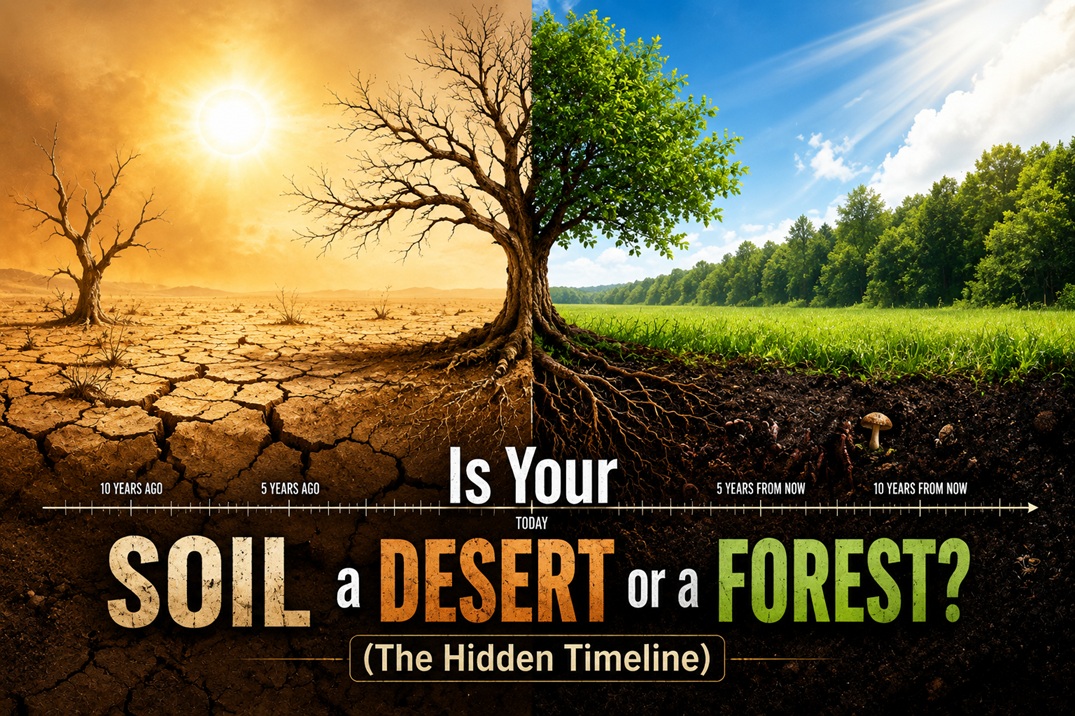
Most farmers think soil is just "dirt" that holds a plant. But soil is alive, and it goes through an evolutionary journey—from a dead desert to a lush forest. Understanding where your soil is on this timeline changes everything.
Stage 1: The "Desert" (The Bacterial World)
Millions of years ago, the earth was just rock and sand. The only things that could survive were bacteria.
When soil is heavily tilled, blasted with chemical fertilizers, and left bare under the hot Trichy sun, we accidentally turn it back into a desert. The delicate life dies, leaving only primitive bacteria behind.
What grows here? Hardy weeds. Nature hates bare skin; it wants to cover itself. So, it sends "pioneer plants"—aggressive weeds with deep roots.
The Lesson: If your field is constantly overtaken by stubborn weeds, your soil is signaling that it is currently in a "bacterial/desert" state. Spraying weedicide won't fix it; changing the soil will.
Stage 2: The "Grassland" (The 50/50 Balance)
As weeds grow and die, they leave behind organic matter. The soil starts to evolve. Now, a new player enters the scene: Fungi.
The soil enters a transition phase where the ratio of bacteria to fungi becomes balanced.
What grows here? Soft grasses, vegetables, and annual crops (like paddy, millets, and groundnuts). These plants love a mix of both bacterial and fungal activity.
Stage 3: The "Forest" (The Fungal World)
If you leave a piece of land untouched for 50 years, it turns into a forest. Why? Because woody organic matter (twigs, leaves, bark) drops to the ground. Bacteria cannot digest wood easily, but Fungi love it.
Over time, the soil becomes Fungal Dominant. Fungi build massive underground networks (mycorrhizae) that act like an internet system, carrying water and nutrients over long distances straight to the plant roots.
What grows here? Big trees—Teak, Neem, and our favorite fruit crops like Mango and Coconut.
The Lesson: A mango tree or a coconut palm hates desert soil. They evolved to thrive in forest soil that is rich in fungi.
The Big Takeaway for Us
Here is the mistake 99% of us make: We plant a forest crop (like Mango) into a desert/bacterial soil (heavily plowed, chemical-heavy land), and then we wonder why we have to spray so many pesticides and pump so much water.
We are forcing a tree to live in the wrong timeline.
Our job in Regenerative Agriculture is to stop resetting the clock with chemicals and heavy plowing. We want to fast-track your soil from a weed-infested bacterial state into a rich, fungal-dominant "forest soil"—because that is where the real health, heavy yields, and profits hide.
We'll talk more.
Ravishankar Karuppiah
New ViVa Bio Nutrients
934 204 9144
To join our WhatsApp group, click here - New ViVa Regen Farmers
தமிழில்:
WA-002: உங்க நிலம் பாலவனமா? காடா? (மண்ணின் ரகசிய டைம்லைன்)
விவசாயத்தை பத்தி தெறிஞ்சிக்கிறதுக்கு முன்னாடி நம்ம மண்ணை கொஞ்சம் தெளிவா தெறிஞ்சிக்குவோம்.
உங்க நிலத்தை கொஞ்சம் உத்துப்பாருங்க... அங்க என்ன வளருது? அருகம்புல்லும், பார்த்தீனியமும், கண்டமேனிக்கு களைகளும் மண்டிப் போயிருக்கா? இல்ல பழ மரங்கள் எந்தப் பிரச்சனையும் இல்லாம செழிப்பா வளருதா?
நம்மள்ள பல பேர் மண்ங்குறது செடியை நட்டு வைக்கிற வெறும் "தரை"னு நினைச்சுட்டு இருக்கோம். ஆனா மண் ஒரு உயிருள்ள ஜீவன். அதுக்குன்னு ஒரு பரிணாம வளர்ச்சி (Evolution) இருக்கு. ஒரு பாலைவனம் எப்படி காலப்போக்குல காடா மாறுதுன்னு நாம தெரிஞ்சுக்கிட்டா, விவசாயத்துல பாதிப் பிரச்சனை முடிஞ்சது. ஆங்கிலத்தில் இதை Ecological Succession அப்படின்னு சொல்லுவாங்க.
நிலை 1: பாலைவனம் (பாக்டீரியா உலகம்)
பல கோடி வருஷத்துக்கு முன்னாடி இந்த உலகம் வெறும் பாறையாவும், மணலாவும் தான் இருந்தது. அங்க "பாக்டீரியா"க்கள் மட்டும்தான் வாழ முடிஞ்சது.
இன்னைக்கு நாம நிலத்தை ரசாயன உரம் போட்டு, அடிக்கடி உழுது, வெயில்ல காயப்போடும் போது... நாம அறியாமலேயே அதை அந்தப் பழைய பாலைவன நிலைக்குக் கொண்டு போயிடுறோம். அங்க மத்த உயிர்கள் எல்லாம் செத்து, வெறும் பாக்டீரியாக்கள் மட்டும்தான் மிஞ்சும்.
இங்க என்ன வளரும்? மொரட்டுத்தனமான களைகள் (Weeds). பூமிக்குத் தன் உடம்பை எப்பவும் மூடியே வச்சிருக்கணும்னு ஆசை. அதான் அது காய்ஞ்சு கிடக்கும் போது, மண்ணை கெட்டியா புடிச்சுக்க இந்த மாதிரி களைகளை முளைக்க வைக்குது.
பாடம்: உங்க நிலத்துல களைகள் அதிகமா வந்தா, "உங்க மண் பாலைவன நிலைமையில இருக்கு"னு அர்த்தம். அதுக்கு களைக்கொல்லி அடிக்கிறது தீர்வாகாது; மண்ணோட தன்மையை மாத்தணும்.
நிலை 2: புல்வெளி (பாதிக்கு பாதி பேலன்ஸ்)
அந்தக் களைகள் வளர்ந்து மட்கும் போது, மண்ணுக்குள்ள "பூஞ்சைகள்" (Fungi) வர ஆரம்பிக்குது. இப்போ மண்ணுல பாக்டீரியாவும், பூஞ்சையும் சரிசமமா இருக்கும்.
இங்க என்ன வளரும்? காய்கறிகள், நெல், சிறுதானியங்கள், கடலை போன்ற பயிர்கள் இங்க நல்லா வளரும். ஏன்னா இந்த பயிர்களுக்கு பாக்டீரியா, பூஞ்சை ரெண்டுமே வேணும்.
நிலை 3: காடு (பூஞ்சைகளின் உலகம்)
ஒரு நிலத்தை 50 வருஷம் நாம தொடாம விட்டா அது காடா மாறிடும், எப்படின்னு யோசிச்சிருக்கீங்களா? மரத்துல இருந்து விழுகுற இலை, தழை, குச்சிகளை பாக்டீரியாவால சீக்கிரம் மட்க வைக்க முடியாது. ஆனா "பூஞ்சைகளுக்கு" (Fungi) அதுதான் சாப்பாடு.
காட்டு மண்ணுல பூஞ்சைகள் அதிகமாயி, அதுங்க மண்ணுக்கு அடியில ஒரு பெரிய நெட்வொர்க் (Mycorrhizae) அமைக்கும். இது ஒரு இன்டர்நெட் ஒயர் மாதிரி வேலை செய்யும்—எங்கயோ இருக்குற தண்ணீரையும் ஊட்டச்சத்தையும் இழுத்துட்டு வந்து மரத்தோட வேருக்குக் குடுக்கும்.
இங்க என்ன வளரும்? தேக்கு, வேம்பு மற்றும் நம்ம ஊர் மாமரம், தென்னை போன்ற பழ மரங்கள் இங்கதான் சூப்பரா வளரும். ஏன்னா இவங்களுக்கு பூஞ்சை நிறைந்த காட்டு மண் தான் பிடிக்கும்.
நாம செய்யுற தப்பு என்ன?
காட்டு மண்ணுல வளர வேண்டிய மாமரத்தையும், தென்னையையும் கொண்டு போய்... நாம ரசாயனம் போட்டு வச்சிருக்கற 'பாலைவன' (Bacterial) மண்ணுல நடுறோம். அப்புறம் ஏன் பூச்சி விழுது, ஏன் தண்ணி பத்தலன்னு கவலைப்படுறோம்.
நாம காலத்தை பின்னோக்கி இழுத்துட்டு போறோம்.
மீளுருவாக்க / ஊட்டச்சத்து விவசாயத்தோட (Regenerative Ag) முக்கிய வேலையே இதுதான்: அடிக்கடி உழுது, மருந்து அடிச்சு மண்ணை பழைய பாலைவன நிலைக்குக் கொண்டு போறதை கொஞ்சம் கொஞ்சமா குறைத்து நிறுத்தணும். மண்ணை வேகமா அந்த "காட்டு மண்" நிலைக்கு (Fungal Dominant) மாத்தணும். ஏன்னா அங்கதான் உண்மையான லாபமும், நோய் வராத பயிர்களும் இருக்கு!
இன்னும் பேசுவோம்.
ரவிசங்கர் கருப்பையா
New ViVa Bio Nutrients
934 204 9144
எங்கள் குழுவில் இணைய இங்கே கிளிக் செய்யவும் -> New ViVa Regen Farmers