⚠️ The Problem with Chemical Farming
It is no secret that we need to move away from chemical farming in its current form.
The over-application of nitrogen fertilizers triggers pest and disease outbreaks. This then leads to the use of pesticides and insecticides—complex toxic compounds that damage both the environment and human health.
We cannot continue down this path.
But here's what many don't realise: our current organic farming model also has serious gaps that need addressing.
🐄 How Organic Farming Works Today
When someone wants to start organic farming, their first step is usually to dump enormous amounts of manure compost into the soil. The next step? Apply Panchagavya, Amrutha Karaisal, Jeevamrutham, Fish Amino Acid, and similar preparations.
Except for Fish Amino Acid, almost everything else comes predominantly from cow manure.
The problem? Our understanding of cow manure is very elementary.
Traditional knowledge tells us it is THE best soil supplement. We simply believe this should still be true today, and so we tend to over-apply it, thinking more is always better for the soil.
To understand why this is problematic, we need to look at two things:
- What goes into the cow's feed
- How nutrients actually work in soil
🌿 Traditional Grazing: The Science Behind "மாடு நுனிப் புல் மேயும்"
Traditionally, cows were raised by grazing pastures. Even 20-30 years ago, this was the norm in villages across Tamil Nadu.
In Tamil, we say "மாடு நுனிப் புல் மேயும்"—meaning "Cows usually only graze the tips of grass."
But why would a cow only eat the tip and not the whole plant?
There is deep science behind this behaviour.
When a cow bites the tip of a plant, the plant's Induced Systemic Response (ISR) kicks in. The plant releases hormones that make its leaves taste bitter. The cow cannot eat more than the tip because the plant starts tasting unpleasant after the first bite—so it moves on to the next plant.
Why is this good for the soil?
When ISR activates, the hormones secreted by the plant strengthen its roots. This improves the soil biology around the plant, which in turn enhances soil structure. The plant itself becomes stronger and more resilient.
This is why traditional cow grazing improves soil health. And the manure from these grazing cows—having fed on diverse pasture plants—is naturally rich in various nutrients, making it genuinely beneficial for the soil.
This is the actual wisdom embedded in our tradition.
🏭 Modern Cow Rearing: A Broken System
Now let us look at how we raise cows today.
Nearly 99% of cows today are fed with cut greens and commercial feeds. Except for a couple of months each year, they are mostly tied to a pole and fed with green forage and external feed supplements.
Here's the critical problem:
- The forage is mainly grown using urea and other chemical fertilizers
- The commercial feeds often contain heavy metals as contaminants
What do you think this cow's manure will do to your soil?
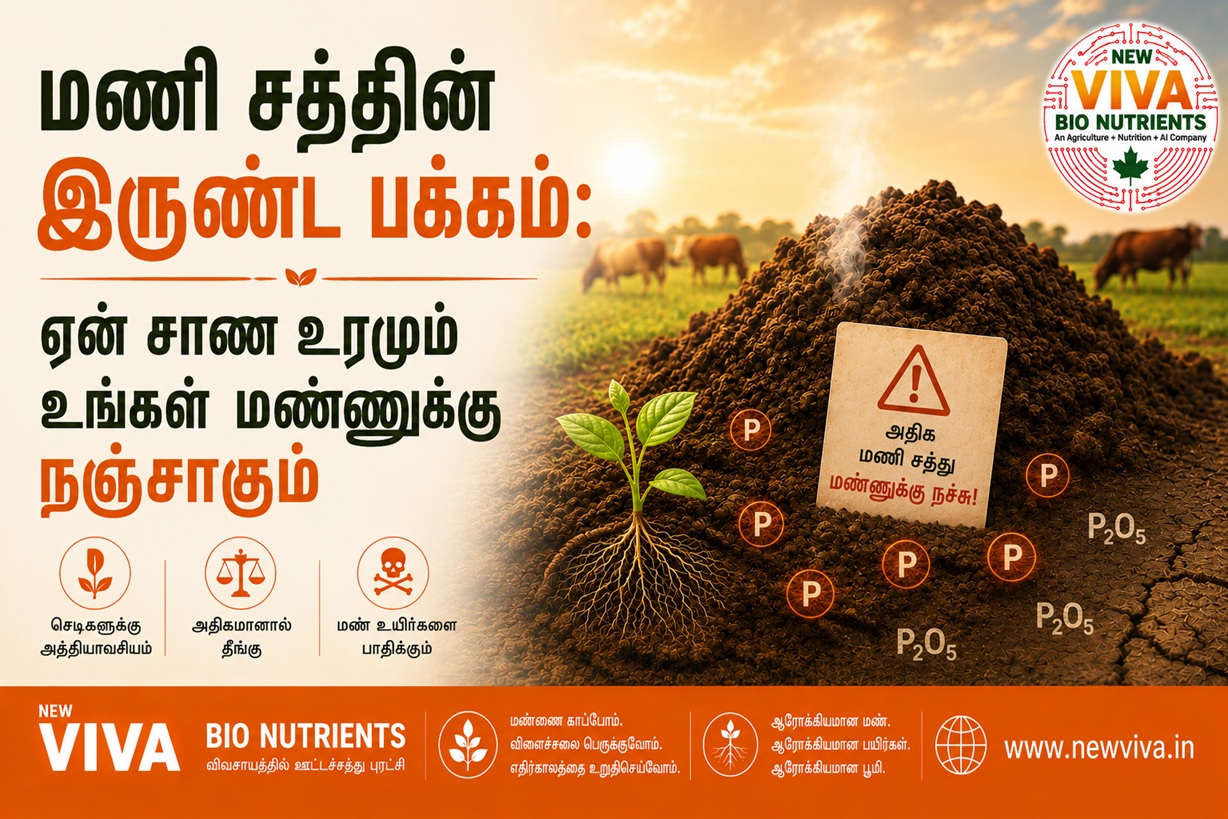
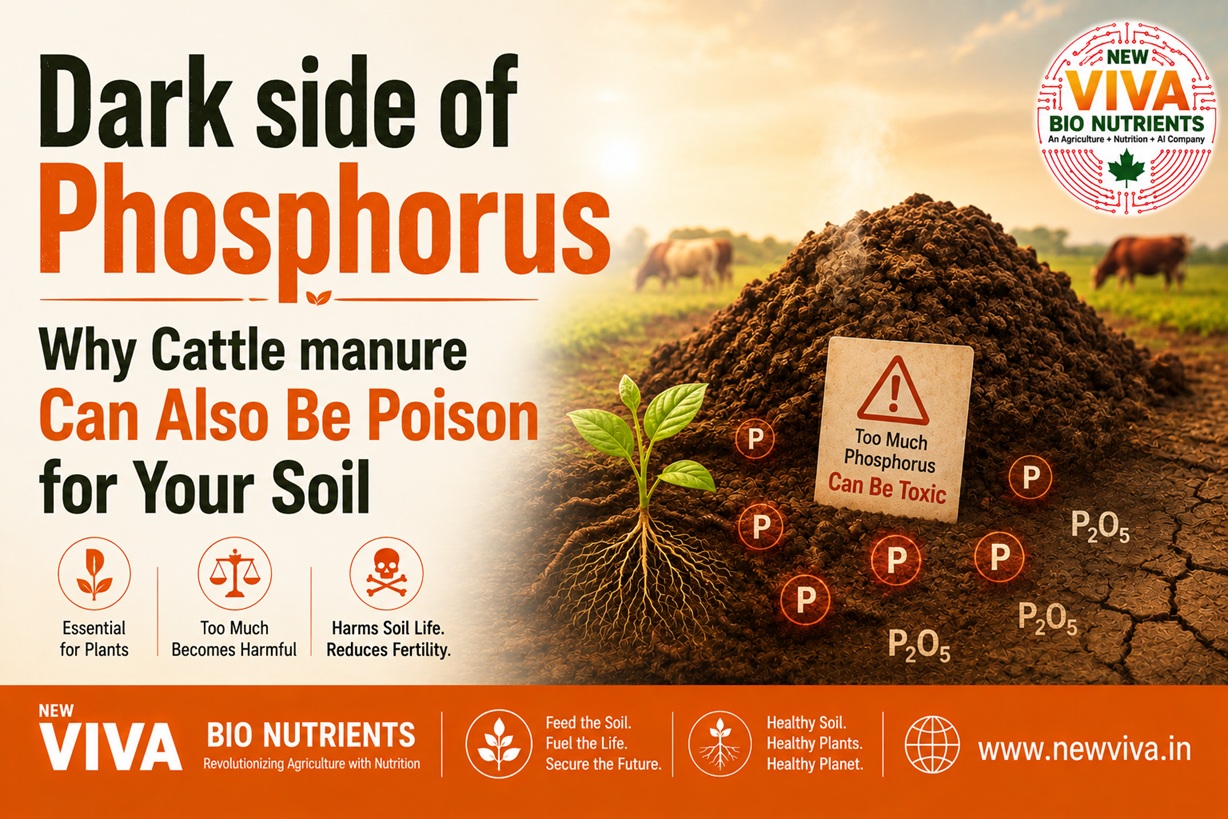
The answer: Too much phosphorus, too much potassium, and significant heavy metal contamination.
⚖️ The Hidden Problem: Nutrient Imbalance
There are organic farmers in the US who stopped applying manure compost more than 15 years ago, yet they are still struggling to balance the excess potassium that accumulated from years of heavy manure application.
Why don't we see this problem being discussed in India?
Because we don't yet understand what happens when soil has too much potassium.
How Nutrient Antagonism Works
This is where we need to understand how nutrients interact in soil. While this is a bigger subject (which I'll cover in future posts), here's what you need to know:
When there is too much potassium in soil, the plant struggles to absorb calcium—because potassium crowds out calcium uptake.
Calcium is a critical second messenger that regulates how plants absorb and transport most nutrients. In potassium-heavy soil:
- Calcium absorption is reduced
- Plants cannot efficiently uptake other essential nutrients
- Photosynthesis is affected
- The plant's stress response weakens
- Overall plant strength decreases
The result? More pest and disease attacks, requiring more intervention to control. And even if your produce is grown "organically," it will have lower nutrition than it should.
📚 The Knowledge Gap
None of this information is currently available to farmers from our agricultural institutions.
Only if we understand how things work can we:
- Measure what is actually in our soil
- Make educated decisions on our farms
- Improve soil health systematically
- Enhance nutrition in our crops
🤖 Why the Current Organic Model Must Evolve—Because of AI
Here's a reality check: Artificial Intelligence is changing everything.
The validity of our current organic farming model can already be questioned using AI today. It will identify all the gaps in our organic practices with scientific precision.
If customers start questioning premium pricing for products whose nutrition levels cannot be verified, organic produce cannot sustain its premium positioning for long.
The organic farming system has to evolve.
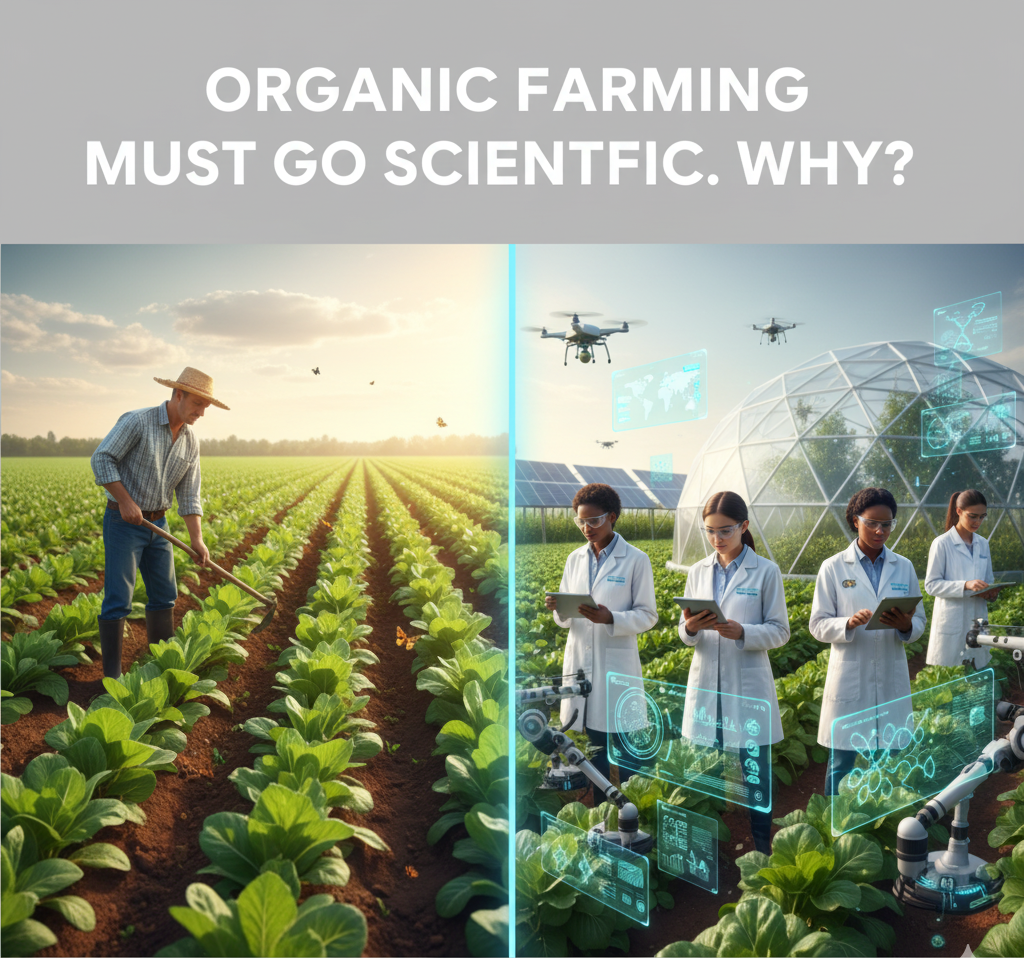
To close these gaps, our organic farming must become scientific and measurable.
This is what we call Regenerative Farming.
🌱 The Future: Regenerative Agriculture
New Viva wants to be at the forefront of the Regenerative Farming movement in India.
Our goal is to make farming:
- ✅ More sustainable
- ✅ More environment-friendly
- ✅ Most importantly—producing more nutritious crops than any other farming system
This is not just an option. This is the future of farming.
📢 What's Next?
We'll explore more on the science, methodology, literature, procedures, and practical applications of regenerative farming on this platform.
Stay tuned. Share this with anyone you think should know about this.
💬 Have questions or facing challenges in your chemical or organic farming? Drop a note through the Contact form. I'll try to address them in future blog posts.
Thank you for reading!