Join our WhatsApp group here -> https://chat.whatsapp.com/DtRfcPrnZykIfmavZU6kj0
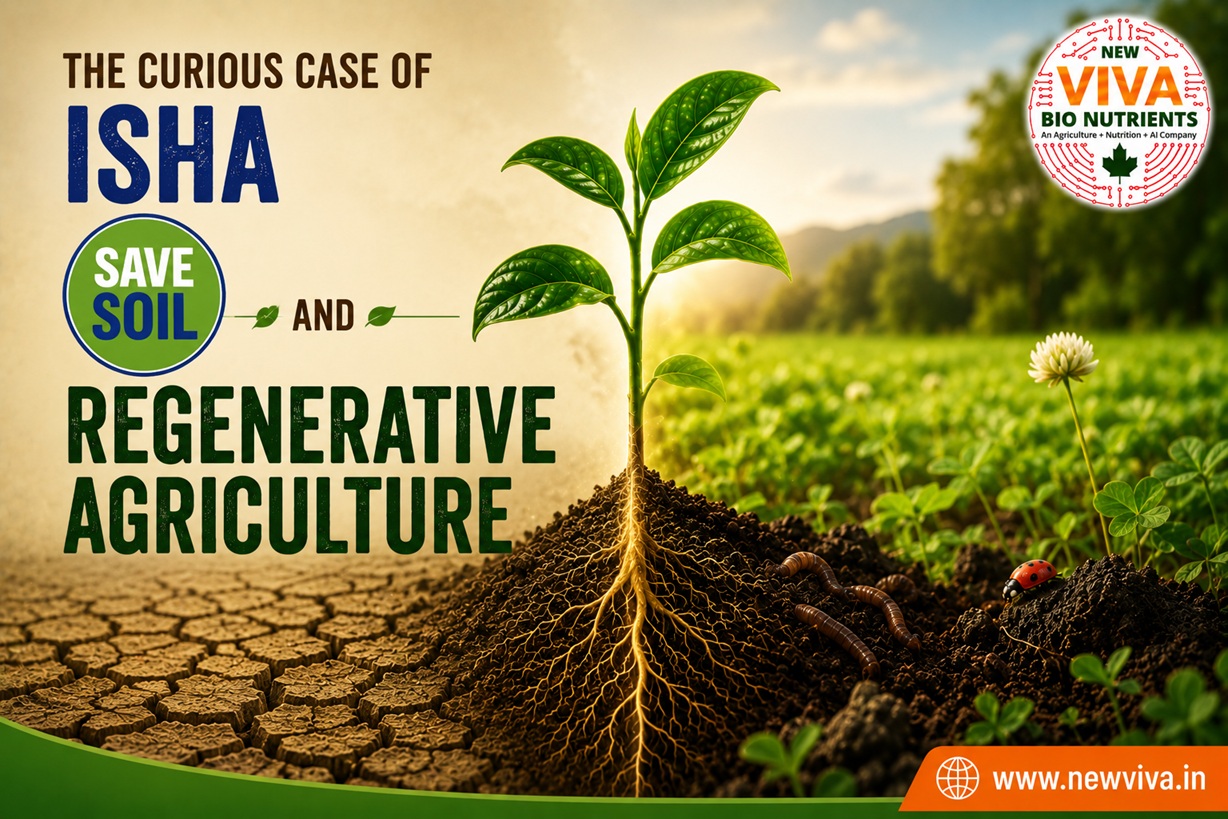
VV-023: The Curious Case of Isha and Regenerative Agriculture
I originally planned to write about Quoram Sensing today. But I had an interesting conversation with an Isha Save Soil movement's co-ordinator and that made me to write this piece. I was thinking, even some of you in this group might be wondering where my posts are getting to. So I just wanted to give a high level idea of what this is all about. Hope it makes sense. IF it doesn't, write to me please.
Why Regen Ag Matters to Every Tamil Farmer Right Now
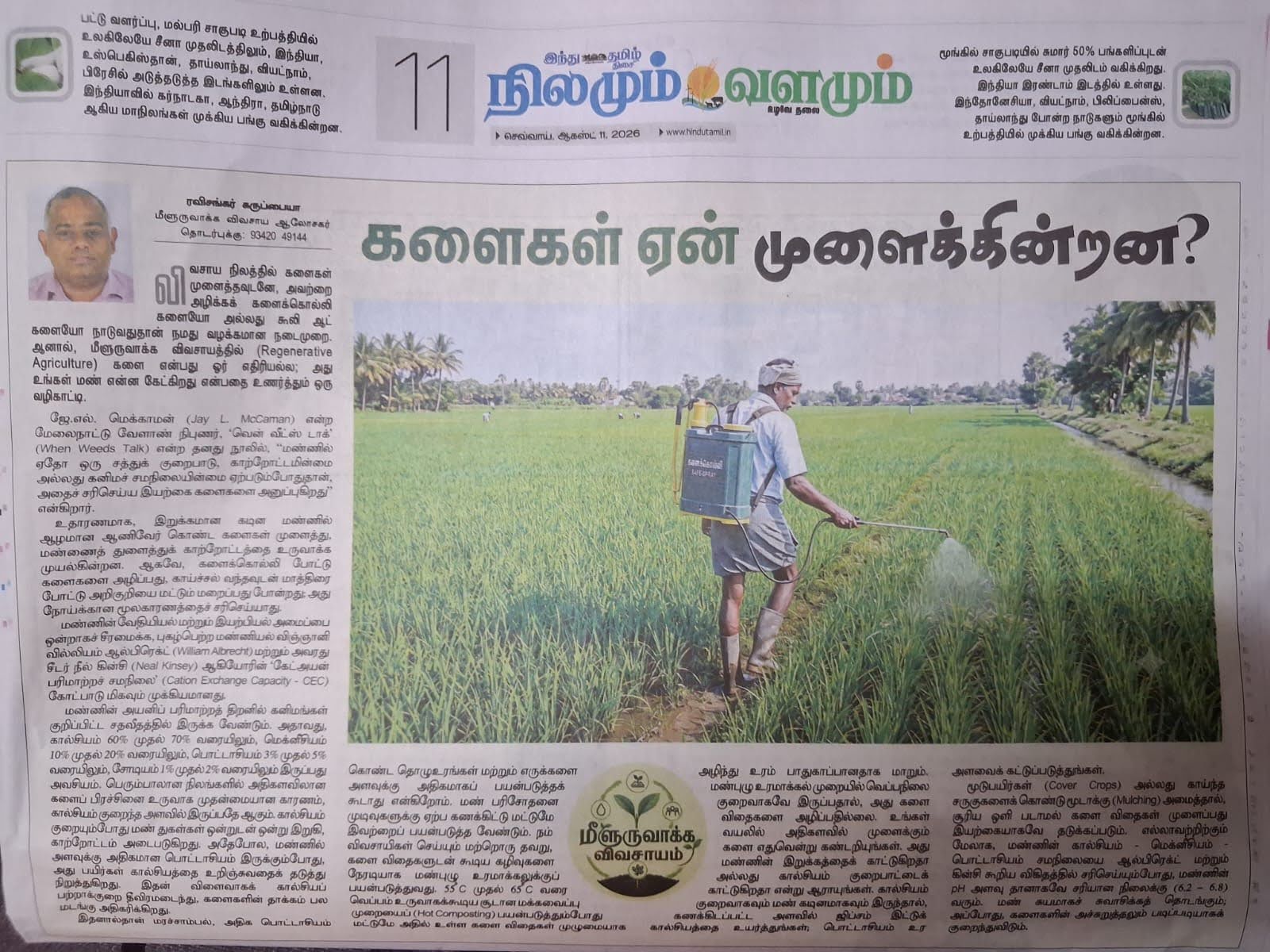
Let me start with something we all know: farming in Tamil Nadu is getting harder.
Input costs keep rising. Monsoons are unpredictable. Pests are more aggressive than ever. Labour costs are exploding. And despite spending for these fixes, yields aren't keeping up.
The soil beneath our feet is tired. And if we don't fix it soon, nothing else will matter.
I've spent the last six years working with farmers across Tamil Nadu—studying soil, testing solutions, watching what works and what fails. What I've seen has convinced me of one thing: Regenerative Agriculture (Regen Ag) is our only real path forward.
What Isha Has Done Right
Let me be honest and fair here. Isha Foundation deserves genuine appreciation.
Their Save Soil campaign has done something extraordinary—they've made soil health a mainstream conversation in Tamil Nadu and across the world. That alone is a massive achievement.
And their on-ground work is producing real results.
Take Valluvan's farm in Tamil Nadu—a case study that Isha rightly showcases with pride. He transformed a coconut monoculture into a diverse food forest. Over seven years, his soil organic matter jumped from 0.86% to 2.33%. His coconut yield went from 90 to 140 nuts per tree. His farm survived both drought and flood conditions that devastated neighboring farms.
Similarly, farmers across the state have adopted natural farming using native cow-based inputs like Jeevamrutham and Panchagavya. Many report better soil health and personal health benefits.
These are genuine successes. We should celebrate them.
But success stories shouldn't stop us from asking: Why aren't many other farmers not able to replicate this?
Where I See a Gap
I want to share something personal here.
Recently, I approached Isha's Save Soil Foundation to request a stall for educating farmers and agri-enthusiasts about regenerative agriculture. The response surprised me. They said they focus only on traditional farming methods—manure, compost, and farmer DIY solutions. They weren't open to science-based measurements or data-driven solutions.
Even their "Hello Tune" phone greeting features Sadhguru asking everyone to "Save Soil." But the approach they have taken for this, seems stuck in a certain framework.
The disconnect is this: The COP28 Climate Action Plan explicitly identifies regenerative agriculture as what's needed for long-term soil health. Globally, the science has advanced tremendously in the last 15-20 years. But India—and perhaps Isha's approach—seems to be lagging behind these developments.
I don't believe Isha is against science. They clearly care deeply about the land and the farmer. But I worry they haven't fully incorporated the latest regenerative science into their model.
And with climate change becoming a climate crisis, time is not on our side.
Four Hard Truths About Organic Farming Today
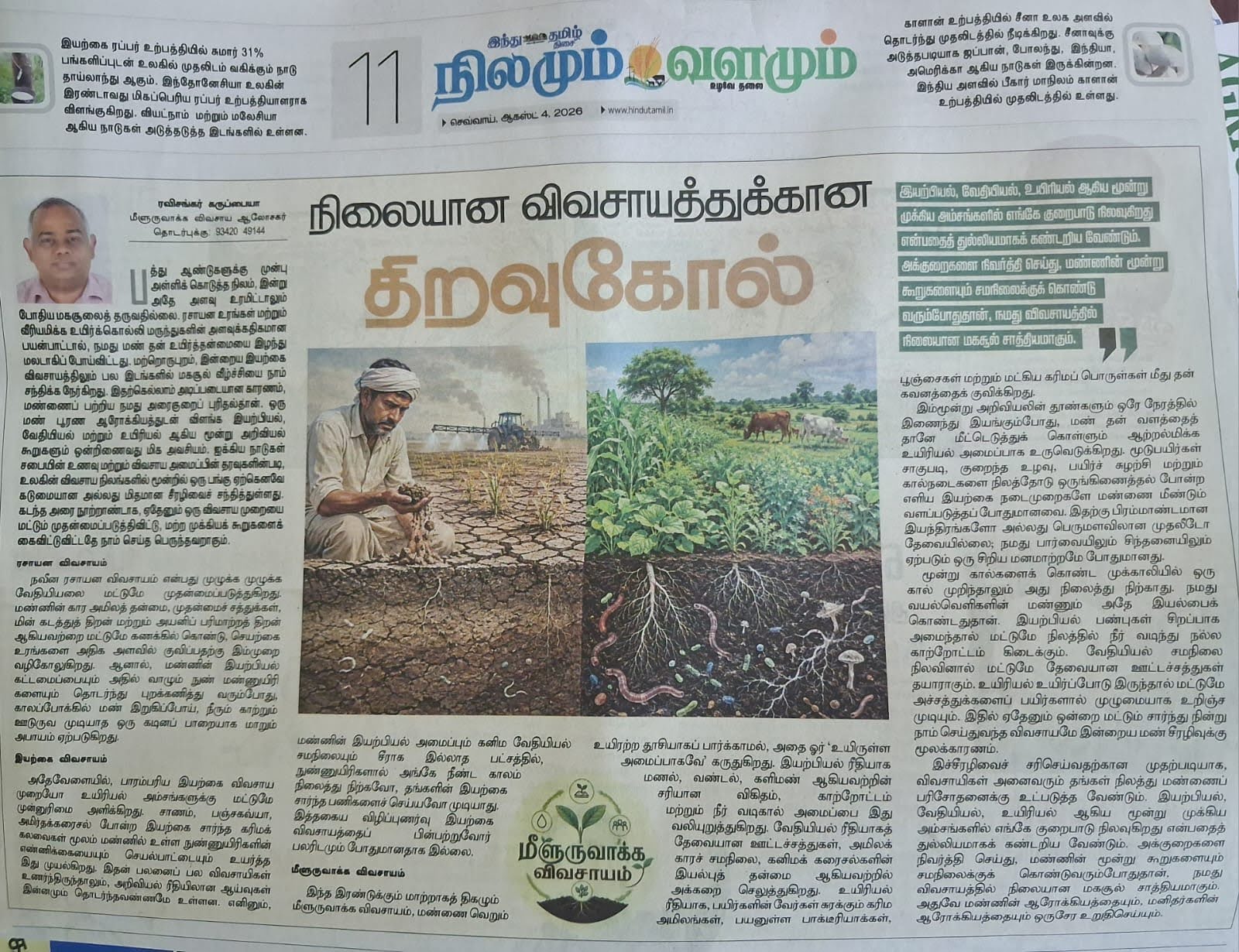
I've been in this journey for six years. I've seen farmers who adopted organic methods in 2020-21 either abandon them or still struggle today. The numbers for paddy are concerning—for other crops, they're even worse.
Here's why:
1. Climate Change Has Changed Everything
Ten thousand years ago, atmospheric carbon dioxide was around 270ppm. Five thousand years ago: 270ppm. One thousand years ago: 270ppm. Two hundred years ago: 270ppm.
Today: 430ppm.
Yes, plants love extra CO₂. But it disrupts seasons, changes familiar environments, and increases pest and disease pressure. A crop today has a 40% probability of fungal infection—compared to 25% just 15 years ago.
This is a climate crisis issue. And organic methods from 100 / 1000 years ago weren't designed for this reality.
2. Cow Manure Today Is Not What It Used to Be
Until the 1950s, 99% of cows drank only rainwater or pond water. Today, most cattle drink high-TDS water—high in carbonates, bicarbonates, and chlorides. And their feeds have lot of heavy metals.
All this ends up in their manure. Modern manure is chemically and biologically different from manure even 50 years ago. What worked for our grandparents won't work the same way today.
3. Farmers Can't Afford to Lose Yield for Years
Even smallholder farmers farm to earn money. We cannot expect them to accept 3 years of lower yields before things stabilize. This is simply not a model farmers can willingly sign up for.
Regenerative farming is a transition model—it tries to keep yields constant while shifting from chemical farming to soil-biology-rich farming. Farmers don't lose revenue during the transition. That's the difference.
4. Organic Has No Effective Answer for Weeds
Here's a reality no one talks enough about: Most organic inputs are high in potassium and phosphorus. High potassium locks out calcium from the soil. And most weeds grow precisely when calcium is not properly balanced.
The irony? Our TNAU and KVK soil testing doesn't even measure calcium. So farmers dump manure thinking it's good, but unknowingly create perfect conditions for weeds.
Organic farming has no solution for this because it doesn't measure soil minerals correctly.
There are more. Organic farming cannot guarantee yield from day 1 and it cannot also scale easily. And most importantly it doesn't measure anything else other than Organic carbon. I've personally seen organic farming soil samples with high organic carbon but terrible Carbon:Nitrogen ratios. (Ideal is 24:1. I found 400:1.) Any nitrogen in that soil gets consumed by microbes, leaving crops severely Nitrogen deficient.
These are the hidden reasons organic farming hasn't reached the masses.
What Makes Regenerative Agriculture Different
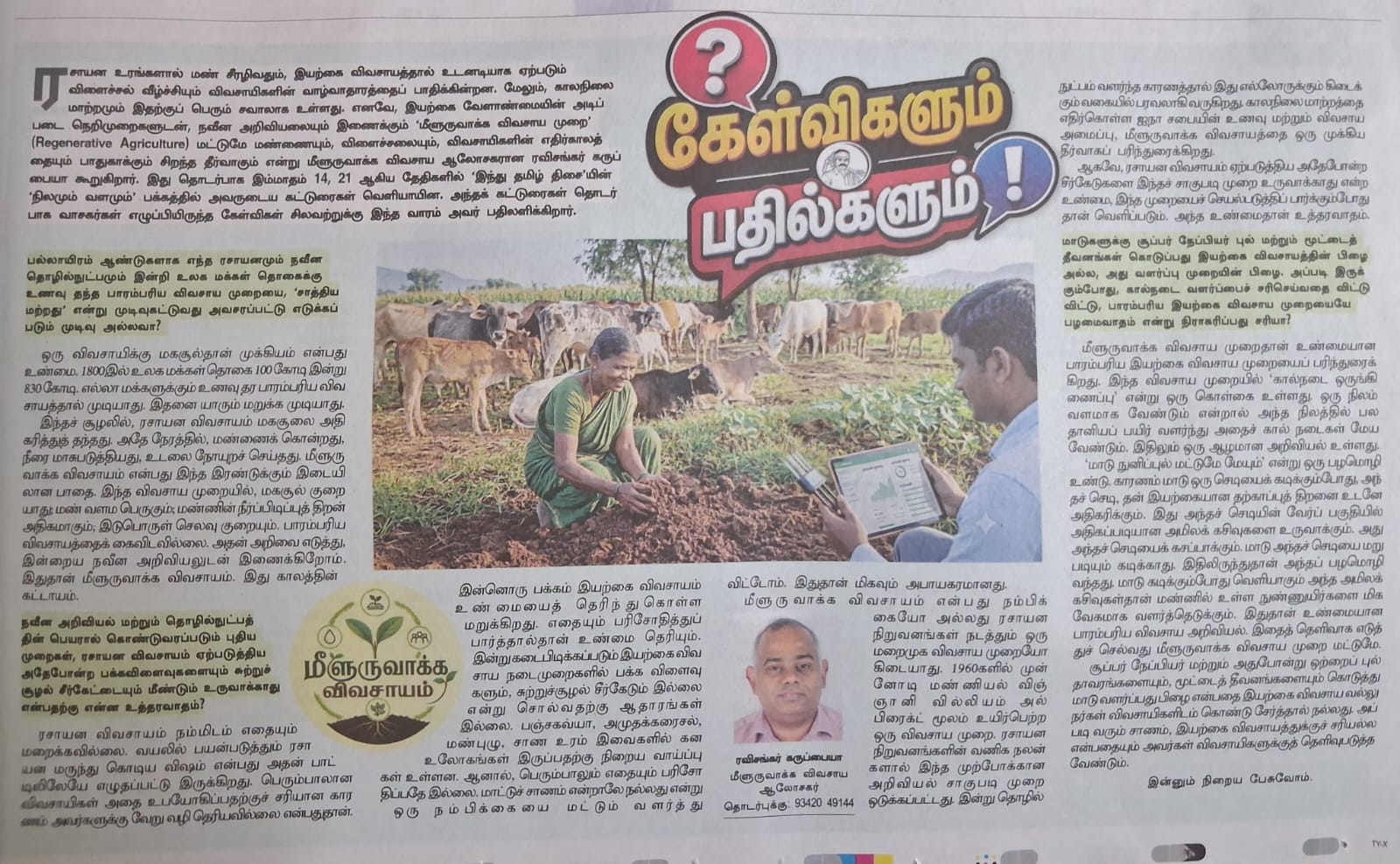
Regenerative agriculture isn't just "organic plus something." It's a fundamentally different approach.
It emphasizes:
- Nutritional balance to grow healthy plants
- Soil biology as the foundation of fertility
- Measurable science to guide decisions
- Constant yields during the transition
A healthy plant builds soil biology far more effectively than any amount of compost or manure we can dump in. And the science to make this happen is already well-established.
The goal is the same as organic farming—biology-rich, healthy soil. But regenerative agriculture gets there systematically and faster.
My Dream for Tamil Nadu
I believe something powerful is possible.
Isha Foundation has the community reach—millions of people who trust and follow their guidance.
Regenerative agriculture has the science and solutions—proven methods that can work in today's climate reality.
Imagine if we combined these two forces. Tamil Nadu could transform its agriculture faster than anywhere else in the world. Our nation would be healthier. Our environment would become more robust. Our soil would truly be saved.
This is why I'm writing this.
An Open Request
If you're part of Isha's Save Soil movement, or if you know someone who is, please share this message.
Let's run test beds this season—for a few selected crops. Let's measure everything. Let's compare regenerative approaches with traditional organic methods. Let's collect real data from our Tamil Nadu soil, our Tamil Nadu climate, our Tamil Nadu conditions.
If regenerative agriculture works as well as the science suggests, we'll have proof that benefits everyone.
Let's Talk
If you're a farmer curious about regenerative methods, join our group.
If you're a Commercial farmer and want to increase your crop nutrition and improve your soil health faster, reach out.
If you're with Isha and willing to explore collaboration, I'm ready to talk.
Thank you!
We'll talk more.
Ravishankar Karuppiah
New ViVa Bio Nutrients
www.newviva.in
934 204 9144